

Fed Holds Inttterest Rates Steady at 3.75%-4% in Final Decision Before Midterms
The Federal Reserve voted 10-2 on Wednesday to hold its benchmark interest rate in a range of 3.75% to 4%, its last scheduled decision before next week's midterm elections. Fed Governor Lisa Cook and Cleveland Fed President Beth Hammack dissented, both preferring to raise rates by a quarter point instead. In its post-meeting statement, the Fed said inflation remains elevated and that it needs more information before deciding its next move, adding that it is committed to returning inflation to its 2% goal.
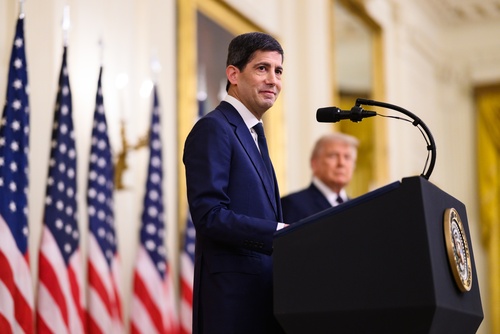
Wednesday's hold follows a 25-basis-point rate increase in September, the Fed's first hike since 2023, which came as inflation accelerated. Consumer prices rose at a 3.7% annual rate in September, up from 3.4% in August, moving further from the central bank's 2% target. President Trump has repeatedly pushed the Fed to cut rates, at one point calling for a reduction to 1% or less, even as Fed Chair Kevin Warsh, whom Trump nominated earlier this year to replace Jerome Powell, backed the September hike as appropriate. Warsh said Wednesday that the midterm elections and politics "played no role" in the decision to hold steady.
Going into the meeting, CME FedWatch data showed traders assigning more than a 90% probability to a hold, and markets are now pricing in the possibility of another rate hike when the Fed meets again December 8-9. Warsh also announced the central bank will reduce its number of rate-setting meetings starting in 2027, carving out one of eight annual meetings for broader policy strategy rather than rate decisions. Until the Fed moves again, elevated borrowing costs are likely to keep weighing on credit cards, mortgages and auto loans heading into the holidays.
What supporters say:
The September hike hasn't fully worked through the economy yet, so raising rates again so soon risks overcorrecting before the data shows whether it's working.
Economic activity is still expanding at a strong pace and job gains have kept pace with the workforce, so there's no urgent sign the economy needs another shock.
Acting right before a national election invites accusations of political interference no matter which direction the move goes, so standing pat protects the Fed's independence.
Consumers already face volatile borrowing costs, and another hike this month could tip some households into real financial strain before clearer data arrives in December.
What critics say:
Inflation climbed from 3.4% to 3.7% in a single month and remains well above the Fed's 2% target, which is exactly why two of the Fed's own voting members pushed to raise rates now.
Waiting risks letting inflation expectations get entrenched, which could eventually force a sharper and more disruptive rate increase than if the Fed acted sooner.
Credit card rates have kept climbing even while the benchmark rate holds steady, so consumers aren't getting relief either way, holding just delays the fix.
Rising energy costs are already straining household budgets, and every meeting the Fed waits adds more time for those pressures to compound before any correction.
What's your take?
Was holding interest rates steady the right call this week? Yes  No
 Other

Sources:
NBC News: Federal Reserve leaves interest rates unchanged despite rising inflation
PBS NewsHour: Warsh holds briefing after Fed leaves key interest rate unchanged
#FederalReserve #InterestRates #Inflation #Midterms2026 #Economy
Now let's hear from you.
You get one Take and 3 ratings so use them well.
Strong arguments beat loud ones. See Moving The Needle (How to)
Don't forget to rate your own Take.
Please don't feed the trolls.





Inflation went from 3.4% to 3.7% in one month and the Fed just sat there. Two of their own voting members said hike now and got outvoted. Waiting on 'more data' while prices keep climbing just means the eventual fix has to be bigger, and it'll hurt more people when it finally comes.