

Nvidia's $35 Billion Surge in Chinese Chip Orders Exposes Gaps in US Export Controls
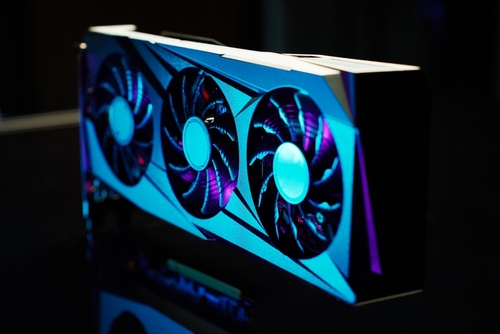
Should the US tighten export controls to close the gap that let $35 billion in Nvidia orders flow to Chinese tech giants? Chinese tech giants Alibaba, ByteDance and Tencent have placed orders for more than 3 million of Nvidia's RTX PRO 5500 graphics cards, a combined order with a list price exceeding $35 billion, according to a Reuters report published Oct. 20. The RTX PRO 5500 is a workstation-grade chip designed mainly for professional computing and AI inference rather than the large-scale data-center training that Nvidia's most powerful chips handle. Total orders from Chinese customers have now topped 6 million units, more than double what Nvidia says it plans to produce worldwide in 2027, and the company has warned partners they may receive only 5% to 10% of what they requested.
The surge reflects the current shape of US export policy toward China. Current rules bar Nvidia from selling its Blackwell-based B300 data-center chip to Chinese buyers outright, while its Hopper-based H200 chip is approved only on a case-by-case licensing basis. The RTX PRO 5500 falls below both thresholds, making it one of the most powerful chips Chinese firms can still legally buy, and demand for it has surged as a result.
A Nvidia spokesperson said the rush reflects outdated restrictions that still cover gaming-era chip designs from years ago, compounded by China's own limits on American imports. The episode illustrates a pattern industry analysts have flagged before: drawing a line between banned and allowed chips doesn't eliminate demand, it concentrates demand on whatever sits just below that line.
What supporters say:
National security advocates say even workstation-grade chips can be pooled to run AI inference at massive scale, helping Chinese firms expand AI services despite restrictions meant to slow that progress.
Policy critics argue that drawing a hard line between banned and allowed chips just concentrates demand on whatever sits below it, meaning the rules need to be redrawn as the technology and workarounds evolve.
What critics say:
Nvidia argues the rules are already outdated, pointing out they cover gaming-era chip designs from years ago while China imposes its own limits on American imports.
Tighter restrictions on workstation-grade chips could push Chinese buyers toward domestic alternatives faster, strengthening China's chip industry instead of slowing it down.
Nvidia can't fill the orders it already has, since the more than 6 million units requested from Chinese buyers dwarfs its planned 3-million-unit global production for 2027, limiting how much of this demand actually becomes shipped hardware.
What's your take?
Should the US tighten export controls to close the gap that let $35 billion in Nvidia orders flow to Chinese tech giants? Yes  No
 Other

Sources:
#Nvidia #ExportControls #AI #China #TechPolicy
Now let's hear from you.
You get one Take and 3 ratings so use them well.
Strong arguments beat loud ones. See Moving The Needle (How to)
Don't forget to rate your own Take.
Please don't feed the trolls.





Every one of these 'compliant' chip workarounds just proves the current rules aren't doing their job. If Chinese firms can stack millions of workstation cards together and still get meaningful AI inference out of it, that loophole needs to close before it gets even bigger.