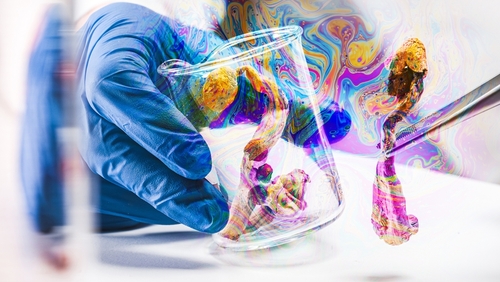
Trump-Backed FDA Fast-Track for Psilocybin and MDMA-Like Therapies Splits Medical Experts
Following President Trump's April executive order directing federal agencies to speed up research and approval of psychedelic treatments for serious mental illness, the Food and Drug Administration (FDA) granted National Priority Vouchers to three drugmakers: Compass Pathways for psilocybin aimed at treatment-resistant depression, the Usona Institute for psilocybin targeting major depressive disorder, and Transcend Therapeutics for a methylone-based treatment for post-traumatic stress disorder (PTSD). The vouchers can shrink typical review timelines from six to ten months down to one or two months.
Health and Human Services Secretary Robert F. Kennedy Jr. said the effort is meant to "confront our nation's mental health crisis head-on, especially for our veterans." All three compounds remain classified as Schedule I drugs, the government's strictest category, reserved for substances deemed to have no accepted medical use, a classification that has long slowed research into their therapeutic potential. Clinical trials have shown signs of promise, including a Phase 3 trial of Compass's psilocybin treatment that reported meeting its primary goal in February, while an earlier MDMA-assisted therapy application for PTSD advanced all the way to an FDA advisory panel before regulators ultimately declined to approve it, citing concerns about separating the drug's effects from the accompanying psychotherapy.
More than two dozen states have moved on their own psychedelic therapy policies in 2026, including a $6 million hospital-based psilocybin pilot program in New Jersey and an expanded program in Connecticut, while Oregon, Colorado and New Mexico already run licensed psilocybin therapy programs. The FDA has also published final guidance for companies running psychedelic drug trials, but has expressed skepticism about whether the psychotherapy that typically accompanies dosing has been rigorously proven to add therapeutic value on its own.
What supporters say:
Veterans' groups and researchers argue treatment-resistant depression and PTSD often don't respond to existing medications, and psychedelic-assisted therapy has shown rapid symptom relief in multiple trials.
Backers say Schedule I classification has needlessly slowed decades of potential research, and faster review could get effective treatments to patients sooner.
State pilot programs in places like Oregon and Colorado are already generating real-world data that supervised therapy can work safely outside a lab setting.
What critics say:
An FDA advisory panel rejected an MDMA-assisted PTSD therapy application in 2024 over concerns that study designs couldn't separate the drug's effects from the psychotherapy that came with it.
Critics warn that review timelines as short as one to two months raise the risk of approving treatments before long-term safety and abuse-potential data exist.
Some scientists say the FDA has been inconsistent, voicing doubt about the therapy component's proven value while still fast-tracking drugs designed to be used specifically alongside that same therapy.
What's your take?
Should the FDA be fast-tracking approval of psychedelic-assisted therapies like psilocybin and MDMA? Yes  No
No  Other
Other 
Sources:
CNN: FDA moves to fast-track review of psilocybin and methylone for mental health
Washington Times: Psychedelic treatments move closer to mainstream at FDA
STAT News: FDA fast-tracks review of new psychedelic mental health treatments
#PsychedelicTherapy #FDA #MentalHealth #Psilocybin #PTSD
Now let's hear from you.
You get one Take and 3 ratings so use them well.
Strong arguments beat loud ones. See Moving The Needle (How to)
Don't forget to rate your own Take.
Please don't feed the trolls.