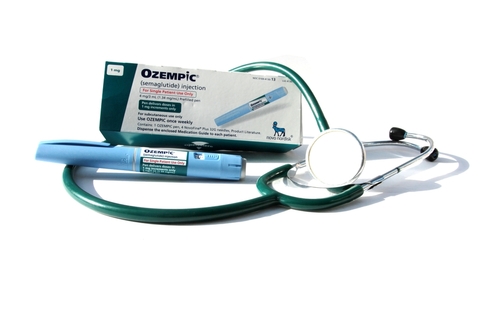
Should Insurance Be Required to Cover GLP-1 Weight-Loss Drugs Like Wegovy and Zepbound?
This post asks whether insurance plans, including employer coverage, Medicaid and Medicare, should be required to cover GLP-1 weight-loss drugs such as Wegovy and Zepbound.
Demand for GLP-1 drugs, originally developed to manage Type 2 diabetes and now widely used for weight loss, has climbed sharply in 2026, but insurance coverage hasn't kept pace. As of July 2026, more than 114 million people had no commercial insurance coverage for Zepbound, an 18 percent increase from 2025, and even among people with some coverage, 88 percent face additional requirements like prior authorization. Only 26 of roughly 300 Affordable Care Act (ACA) marketplace plans covered GLP-1s for obesity in 2026, a number that has been shrinking rather than growing.
List prices remain a central sticking point, with GLP-1s priced above $1,000 a month before rebates. Medicare began covering select GLP-1 drugs for weight loss for the first time in July 2026 through a new Bridge Program that caps beneficiaries' out-of-pocket costs at $50 a month, though eligibility depends on body mass index (BMI) and having a related condition like prediabetes or heart disease. On the other end, Pennsylvania eliminated Medicaid coverage of GLP-1s for weight loss starting in January 2026, and researchers at the University of Pennsylvania's Leonard Davis Institute say other states may follow. Employers are similarly divided: consulting firm Mercer found that in 2024, 44 percent of employers with 500 or more workers, and 64 percent of those with 20,000 or more, covered weight-loss medications, but rising costs are pushing some to reconsider that decision for 2026 even as others expand it.
Clinical trials have shown GLP-1 drugs produce substantial weight loss, and mainstream medical groups broadly support their use for patients who meet clinical criteria for obesity. The debate underlying this post isn't really about whether the drugs work. It's about who should pay for them at scale, and whether the answer changes depending on whether you're an insurer managing a risk pool, an employer managing a budget, or a patient managing a chronic condition.
What supporters say:
Untreated obesity contributes to diabetes, heart disease and other costly conditions, so proponents argue covering GLP-1s now could reduce more expensive complications down the road.
At list prices over $1,000 a month, proponents say leaving coverage optional effectively rations an effective treatment by income, since only wealthier patients can pay out of pocket.
Medicare's new Bridge Program, which caps costs at $50 a month for qualifying beneficiaries, shows coverage can be structured with eligibility guardrails rather than open-ended cost exposure.
What critics say:
Insurers warn that with tens of millions of adults meeting clinical criteria for obesity, full coverage could strain premiums across their entire risk pool.
High rates of people discontinuing treatment early raise questions for insurers about long-term value, since GLP-1s are generally meant to be taken indefinitely to maintain results.
Some states and employers, including Pennsylvania's Medicaid program, have already concluded costs aren't sustainable at current prices and have scaled coverage back rather than expanded it.
What's your take?
Should insurance plans be required to cover GLP-1 weight-loss drugs like Wegovy and Zepbound? Yes  No
No  Other
Other 
Sources:
#GLP1 #HealthInsurance #Wegovy #Zepbound #HealthPolicy
Now let's hear from you.
You get one Take and 3 ratings so use them well.
Strong arguments beat loud ones. See Moving The Needle (How to)
Don't forget to rate your own Take.
Please don't feed the trolls.