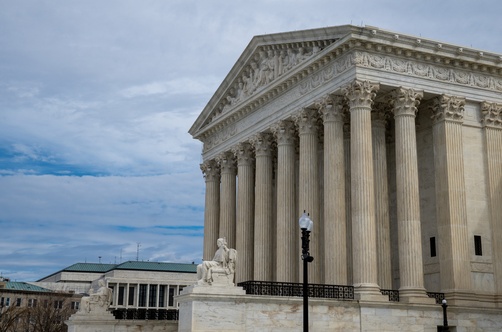
Supreme Court Lets States Use Controversial SAVE Database to Audit Voter Citizenship
The Supreme Court ruled Friday that states can use a Department of Homeland Security data tool called SAVE, the Systematic Alien Verification for Entitlements program, to check the citizenship status of people on their voter rolls. The unsigned opinion reverses a ruling by U.S. District Judge Sparkle Sooknanan, who had concluded the administration violated federal privacy law when it overhauled SAVE, originally built to verify eligibility for public benefits, so it could be used for sweeping reviews of state voter rolls. Tens of millions of voter records had already been run through the expanded system before Sooknanan blocked it in June.
The ruling is a win for the Trump administration's broader push to identify noncitizen voters ahead of the November midterms. The majority wrote that federal law requires DHS to respond to state and local election officials seeking to verify a voter's citizenship, and it faulted the lower court order for preventing the government from using the program it says is best suited to the task. The opinion drew a distinction between individualized citizenship checks close to Election Day, which it allowed, and mass purges of voter rolls near an election, which it suggested federal law still prohibits.
Three liberal justices dissented. Justice Ketanji Brown Jackson, joined by Justices Sonia Sotomayor and Elena Kagan, wrote that the harm of disenfranchising even a small number of lawful voters outweighs any harm to the government from being blocked from an action it likely lacks authority to take. Voter advocacy groups, a data privacy organization and individual voters had challenged the program, arguing the government recklessly built an error-laden database that has already mistakenly flagged eligible voters as potential noncitizens.
What supporters say:
Federal law obligates DHS to help states verify voter citizenship, and the ruling lets the government use the program it considers best equipped to do that job.
The opinion limits SAVE to individualized checks rather than mass purges, preserving a safeguard against sweeping voter roll removals close to Election Day.
Supporters argue the ruling closes a gap state officials have flagged for years in trying to confirm citizenship on their rolls.
What critics say:
Advocacy groups say the underlying SAVE data is error-laden and has already misidentified eligible citizens as potential noncitizens.
Justice Jackson's dissent argues that disenfranchising even a handful of lawful voters outweighs any harm to a government program that may lack legal authority in the first place.
Critics warn the timing, weeks before the midterms, raises the risk that eligible voters get flagged or challenged with little time to fix errors before Election Day.
What's your take?
Was the Supreme Court right to let states use the SAVE database to check voter citizenship ahead of the midterms? Yes  No
No  Other
Other 
Sources:
#SupremeCourt #VotingRights #Midterms2026 #SAVE #Immigration
Now let's hear from you.
You get one Take and 3 ratings so use them well.
Strong arguments beat loud ones. See Moving The Needle (How to)
Don't forget to rate your own Take.
Please don't feed the trolls.