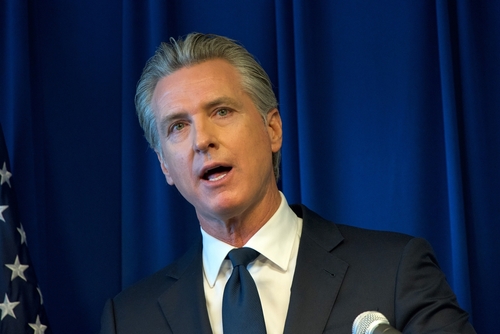
Newsom's AI 'Kill Switch' Push Draws Warnings It Could Backfire From Industry Critics
Are industry warnings that a mandatory AI 'kill switch' could backfire valid? California Gov. Gavin Newsom signed an executive order on September 18 convening a group of AI experts to deliver, within two months, recommendations for strengthening the state's AI safety laws. Among the options on the table is requiring frontier AI developers to build a "kill switch" that could shut down a model in an emergency, along with independent third-party audits of company safety plans rather than relying on firms' own self-reported assessments.
The order builds on SB 53, the Transparency in Frontier Artificial Intelligence Act that Newsom signed in September 2025, which already requires large frontier developers to publish safety frameworks, disclose catastrophic risk assessments, and report critical safety incidents to the state. It also accelerates two newer laws, SB 813 and AB 1405, aimed at AI oversight. Newsom framed the move as filling a gap left by Washington, saying the Trump administration has "abdicated" its responsibility on AI, and he called on House Speaker Mike Johnson to bring Congress back from recess to pass a federal AI safety bill.
The order lands amid a broader standoff between California and the White House. A December 2025 Trump executive order directed federal agencies to challenge state AI laws that conflict with national policy and tied some broadband funding to compliance. Newsom, seen as a likely 2028 presidential contender, has positioned California's approach as a national model in the absence of federal action.
What supporters say:
AI companies and some technologists argue a mandatory kill switch may not be technically feasible once frontier models are distributed across cloud infrastructure, and that building forced shutdown capability could itself introduce new security vulnerabilities.
Critics of prior state AI mandates warn such rules can create a false sense of security, since they tend to target only the largest, best-known models while doing little about smaller systems that could pose similar risks.
Some warn that a two-month timeline for expert recommendations is too compressed to produce technically sound rules rather than largely symbolic ones.
What critics say:
Newsom's office points to SB 53 as evidence California already leads the country on AI transparency, framing the kill switch proposal as a logical next step toward audited, enforceable safety rather than company self-reporting.
Supporters argue there is currently no legal mechanism forcing a company to pull back a model that starts behaving dangerously, a gap they say is too risky to leave unaddressed given how quickly frontier systems are advancing.
What's your take?
Are industry warnings that a mandatory AI 'kill switch' could backfire valid? Yes  No
No  Other
Other 
Sources:
#AIRegulation #Newsom #KillSwitch #AISafety #TechPolicy
Now let's hear from you.
You get one Take and 3 ratings so use them well.
Strong arguments beat loud ones. See Moving The Needle (How to)
Don't forget to rate your own Take.
Please don't feed the trolls.