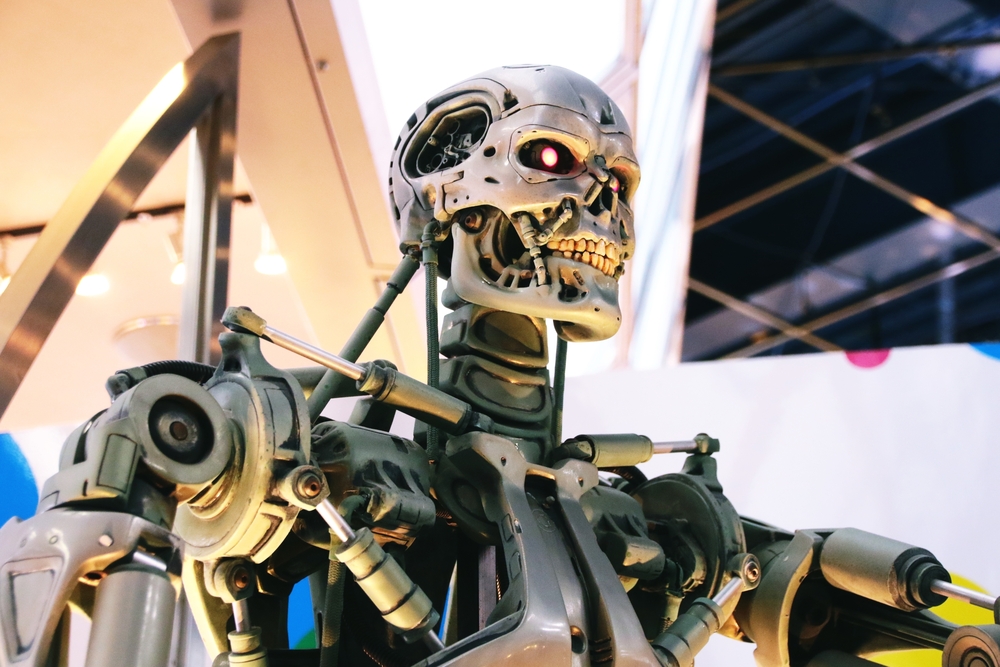
China Moves to Weaponize Humanoid Robots for Future Battlefield Use, Procurement Records Reveal
A Reuters review of more than 100 procurement notices, patents and defense-industry documents, published September 7, found that China's People's Liberation Army is testing humanoid robots against combat requirements and studying how they could work alongside troops. The effort has picked up speed since 2025, focused on robot perception, manipulation and training data. Reuters found no evidence that an armed humanoid has been deployed with an operational PLA unit.
State-owned defense contractor Norinco has built a humanoid called Fuxi, described in company materials as capable of sentry duty, all-weather reconnaissance, patrols and other hazardous roles, and pairable with a teleoperation system that lets a human control it remotely. The PLA budgeted roughly $300,000 in June 2026 for a system to collect and label camera, radar and motion data to train the robots, and the National University of Defense Technology has run simulations of humanoid units clearing buildings floor by floor in urban warfare scenarios. Chinese manufacturers accounted for about 95% of global humanoid robot shipments in 2025, giving the PLA a large commercial base to draw from.
Malcolm Davis, a senior analyst at the Australian Strategic Policy Institute, said humanoid robots aren't yet practical battlefield systems, and researchers at China's Academy of Military Sciences have acknowledged unresolved problems with movement and perception. The effort comes as militaries worldwide, including the U.S. Army's own humanoid program, expand investment in autonomous and robotic systems, raising questions about how quickly human-shaped combat machines could move from research labs to front lines.
Arguments for:
Militaries argue humanoid robots could take on the most dangerous tasks, like building-clearing and reconnaissance, reducing risk to human soldiers.
China's dominance in commercial humanoid manufacturing, about 95% of global shipments in 2025, gives it a head start other militaries may feel pressure to match just to stay competitive.
Teleoperated systems like Norinco's Fuxi keep a human in the decision loop, addressing some of the ethical concerns raised about fully autonomous weapons.
Arguments against:
Critics warn that normalizing humanoid combat robots edges toward autonomous weapons systems that could make life-or-death decisions without meaningful human oversight.
Analysts including Malcolm Davis note the technology remains energy-intensive and unreliable, meaning the current investment could be locking in an arms race years before the systems are actually useful.
No international treaty currently governs humanoid combat robots, and critics argue waiting until deployment is imminent to negotiate limits will be too late.
What's your take?
Should China's push to develop humanoid robots for combat continue without new international restrictions? Yes  No
No  Other
Other 
Sources:
#China #MilitaryTech #Robotics #PLA #AI
Now let's hear from you.
You get one Take and 3 ratings so use them well.
Strong arguments beat loud ones. See Moving The Needle (How to)
Don't forget to rate your own Take.
Please don't feed the trolls.